
History of Songkran Origins
Songkran is a traditional Thai New Year festival, which originated in Thailand. It is celebrated annually from April 13th to April 15th. The origins of Songkran can be traced back to ancient Indian and Southeast Asian cultures. The festival is influenced by the Hindu Sankranti festival and the solar calendar, which marks the beginning of the new astrological year. The word “Songkran” is derived from the Sanskrit word “saṃkrānti,” which means “astrological passage” or “transformation.”
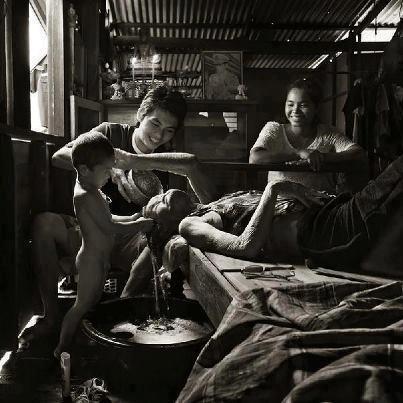
Over time, Songkran has evolved and incorporated various customs and traditions from different regions of Thailand. Today, it is best known for its water splashing events, which symbolize purification and the washing away of sins and bad luck. Other customs include visiting temples, offering food to monks, and paying respects to elders.
Who Started the Water Throwing?
The water throwing and splashing tradition during Songkran has been influenced by various factors over time. Although it is difficult to attribute this aspect of the festival to a specific individual or group, we can identify some of the cultural and historical influences that have contributed to the development of this tradition.
- Buddhist tradition: In Buddhism, water is often used as a symbol of purification. During Songkran, people visit temples to pour water over Buddha statues, which is believed to bring good fortune and blessings. This ritual has evolved into the widespread water throwing and splashing that is characteristic of modern Songkran celebrations.
- Cultural blending: As Songkran evolved, it incorporated elements from different regions of Thailand and neighboring countries, which likely contributed to the development of the water splashing tradition.
- Climate: Songkran takes place during the hottest time of the year in Thailand. Splashing water on each other during the festival not only symbolizes purification but also provides a fun and refreshing way to cool off.
- Social bonding: The water splashing tradition is also an opportunity for communities to come together and celebrate. The festive atmosphere encourages people to engage with one another, fostering social connections and unity.
In summary, the water throwing and splashing tradition in Songkran is a product of various cultural, religious, and social influences. It is not attributed to a specific person or group but rather has evolved over time as a result of these factors.
Countries That Celebrate a Similar Water Festival
Several countries in Southeast Asia celebrate New Year water festivals that are very similar to Thailand’s Songkran. These include:
- Myanmar: Thingyan (celebrated around April 13–16)
- Laos: Pi Mai Lao or Lao New Year (April 13–15)
- Cambodia: Chaul Chnam Thmey (April 13–15)
- Vietnam: Tết Nguyên Đán (lunar new year) — water is not central, but in ethnic minority regions like the Tai Dam people, similar customs exist
- Sri Lanka: Aluth Avurudda (April New Year, with symbolic water rituals)
- Parts of Southern China (especially the Dai ethnic group in Yunnan Province): Water Splashing Festival (also around mid-April)
Origins — Did Any of These Traditions Start Before Thailand’s Songkran?
Yes — and No.
- – The concept of celebrating the solar new year originates from India, particularly tied to ancient Hindu and Buddhist practices. The “Sankranti” festivals (meaning “astrological transition”) mark this change — and these ideas traveled with Indianized Buddhism and Hinduism across Southeast Asia.
- – Thingyan in Myanmar is very old — it’s believed to have started as early as the Pagan Kingdom (~9th–13th century), influenced by Indian Makar Sankranti traditions.
- – Chaul Chnam Thmey and Pi Mai Lao likely developed at a similar time as Thailand’s early Songkran, because the Khmer Empire (9th–15th centuries) dominated much of the region, influencing Thailand, Laos, and Cambodia.
- – The Thai Songkran developed its modern form after Ayutthaya period (14th–18th centuries) — making it slightly later in formalization compared to the earliest Khmer New Year traditions.
Short version:
- – Indian influence was first (around 1,500+ years ago).
- – Cambodia, Laos, Myanmar adapted these ideas regionally before Thailand’s Songkran became the massive celebration we recognize today.
- – Thailand’s Songkran then expanded uniquely with large-scale public water fights much later — probably during 20th century modernization and tourism development.
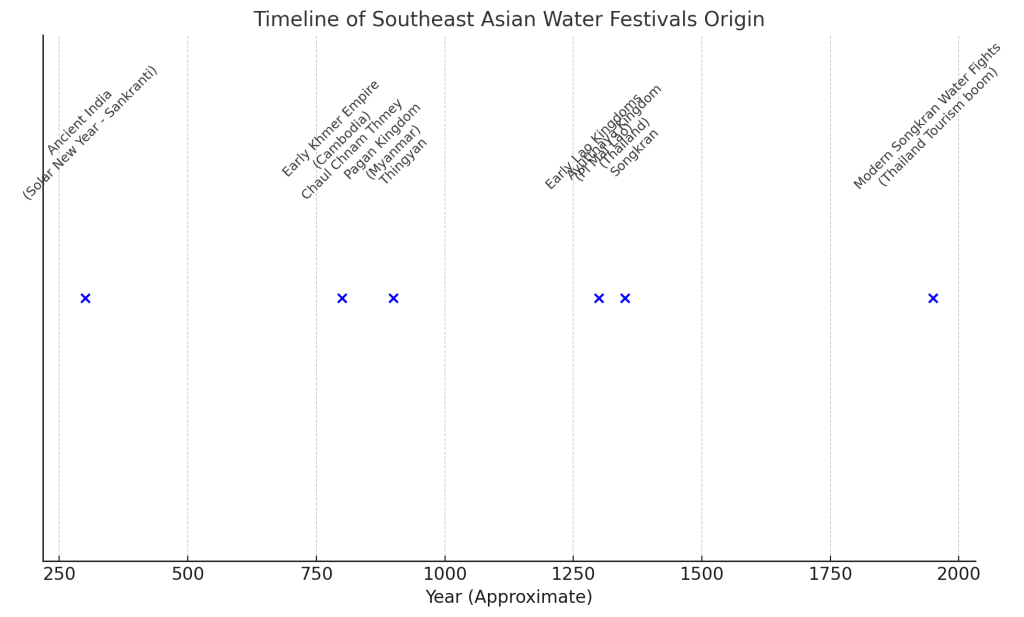
Here’s a timeline showing the progression of water festival traditions in Southeast Asia!
It starts from ancient Indian solar new year traditions and spreads through Cambodia, Myanmar, Laos, and finally into Thailand’s Songkran — with the modern water fights becoming popular after 1950.
Here’s A Few More Fun Articles on Songkran
CNN – https://edition.cnn.com/travel/songkran-thailand-water-fights-traditions-intl-hnk/index.html
BBS – https://www.bbc.com/travel/article/20250411-songkran-the-worlds-biggest-water-fight