
A Response to a Democratic Friend
I’ve been asked how I could possibly support Donald Trump. I’ve been accused — by some — of being racist, sexist, and worse, all because of where I stand. More recently, a friend asked what elements of character I actually find in the man. The answer is layered: there are qualities I genuinely admire, others that make me roll my eyes, and still others I can’t help but laugh at. My support did not come from outrage or blind loyalty. It came from stepping back and asking a harder question: Is the direction of this country sustainable?
For decades, I watched debt balloon, borders weaken, institutions politicize themselves, and global competitors grow stronger — while I stayed focused on my own work. At some point, the drift became impossible to ignore. I don’t believe we can continue on that path and expect stability on the other side. You may disagree with my conclusions. But my decision was quite deliberate.
Before Politics: A Consistent Voice
Donald Trump did not simply invent his positions in 2016. Throughout the 1980s and 1990s, he spoke publicly — and consistently — about trade imbalances, weak American negotiation abroad, NATO burden-sharing, and the decline of U.S. manufacturing. His tone was blunt, as it remains today, but the underlying themes never shifted. He often said he didn’t particularly want to run for president, but that he might have to if the country continued down what he saw as a failing path.
Whether you like him or not, that ideological consistency over decades is something I cannot say for the majority of career politicians. And there is something else worth noting: he was never a politician. In many ways, he is precisely what the Constitution envisioned — a citizen who sets aside his own work, rolls up his sleeves, and serves. That stands in contrast to the career political class, who too often profit from the constituents they claim to represent.
The Man Behind the Caricature
Trump’s personal life was not spotless. He divorced twice and lived openly within the celebrity culture of 1980s and 1990s New York. That is factual. But it is equally factual that all five of his children publicly support him. His adult children are educated, professionally accomplished, and visibly engaged with his life. There is family cohesion there — not estrangement — and that tells me something the tabloids do not.
The portrait of a reckless narcissist is incomplete at best. Even in business, the picture is complicated: generous to some, ruthless to others — the profile of a man who learned through hard experience, through trial and error, through the unglamorous grind of building things. Was he flashy in his younger years? Yes. Does that negate decades of business leadership and fatherhood? I find that question far more subjective than the media tends to treat it. I judge leaders by direction and impact, not by tabloid headlines from thirty years ago.
Immigration: Law, Order, and Realism
I support legal immigration. America has always been strengthened by people who follow the process and contribute. What I do not support is systemic tolerance of unlawful entry. When borders go unenforced, the consequences land locally — on schools, hospitals, housing systems, and municipal budgets. Sanctuary cities have reported billions in migrant-related expenditures in recent years. Resources are finite, and every emergency dollar allocated has a tradeoff somewhere else.
That said, deporting individuals who have lived peacefully in this country for fifteen or twenty years — who built families under decades of inconsistent enforcement — is neither realistic nor humane. A serious immigration policy must include securing the border going forward, enforcing laws consistently, and establishing a structured legalization pathway for long-term, law-abiding residents. Children born here who know no other country should not be punished for a systemic failure they did not create. That position is not anti-immigrant. It is pro-order and pro-reality.
The Economy: Outcomes Matter
Before the pandemic, unemployment reached historic lows. Wage growth was rising. Minority unemployment hit record levels. Business confidence was strong. You can reasonably argue that some of those trends began under the previous administration — that’s fair — but the momentum continued, and the results were real for working people.
What concerns me more deeply is the structural problem that predates any single administration: unchecked federal spending. The national debt now exceeds thirty trillion dollars, and interest payments alone consume enormous portions of the federal budget. When billions are lost to fraud or mismanaged programs, that loss is not abstract — it is borrowed from future generations or extracted through inflation from working families. Cases of pandemic-era fraud, including large-scale abuse in child nutrition programs, illustrated precisely how emergency spending without tight oversight invites corruption. Protecting social programs requires protecting them from the people who exploit them. Efficiency is not cruelty. Accountability is not heartlessness.
Foreign Policy: A More Defensible America
We no longer live in a unipolar world. Strategic competition from China and assertive behavior from Russia define the current geopolitical moment. Trump’s foreign policy emphasized challenging unfair trade practices, pressuring allies to meet their defense commitments, reducing supply chain dependency on adversaries, and avoiding prolonged foreign entanglements. His administration maintained sanctions on Russia, supplied lethal aid to Ukraine, and pushed European nations to increase defense spending within NATO. In the Middle East, the Abraham Accords reshaped diplomatic relationships in ways that few predicted and many dismissed as impossible.
You may object to the tone. The strategic recalibration, however, was real. Foreign policy is not about speeches. It is about positioning America to withstand instability and competition — and on that measure, the record deserves a more honest accounting than it typically receives.
A Symptom of Systemic Failure
One belief I’ve carried for years is this: Trump is not the disease. He is evidence of it. He is the product of systemic failure — proof that millions of Americans felt unheard long before he descended that escalator in 2015. He emerged after decades of growing distrust in institutions, ballooning debt, border dysfunction, endless foreign entanglements, and political language that felt increasingly detached from everyday life. That one individual could disrupt an entrenched system the way he did says something significant about how brittle that system had become. Whatever you think of him personally, that fact is worth sitting with.
Media, Accountability, and Public Trust
I would be remiss not to address what I believe has been one of the most corrosive elements of the past decade: media conduct. I have watched major outlets frame stories with certainty that later unraveled, amplify unverified claims, and blur the line between reporting and commentary. Whether through corrections, retractions, or legal settlements, several high-profile narratives have faced serious scrutiny — in courtrooms and in public review alike. Trump has filed and pursued defamation actions against media organizations, and in some instances those disputes have resulted in settlements or payments. Regardless of one’s opinion of him, the fact that major outlets have faced legal consequences should prompt at least some reflection. When trust in institutions collapses, it is not solely because of political rhetoric. It is also because credibility, once lost, is genuinely difficult to restore. Accountability should apply to everyone — including the press.
We Probably Agree More Than We Admit
Here is something I genuinely believe: you and I likely agree on far more than we disagree. We both want secure communities, fair economic opportunity, honest government, accountability for corruption, and a stable future for our families. Where we diverge is often not in goals, but in diagnosis and method — and I believe much of that divergence is amplified by media ecosystems that reward outrage and caricature over nuance. If all we consume are the most inflammatory portrayals of each other’s positions, division becomes not just likely but inevitable. I do not see you as my enemy. I see you as someone who wants many of the same outcomes, but trusts different mechanisms to get there.
The Simplicity Problem
I’ve long held the belief that most solutions are simpler than we allow them to be. Enforce the border. Enforce the laws. Audit the spending. Protect domestic industry. Maintain strong alliances through accountability. These are not radical ideas — they are foundational principles of governance. And yet, over time, we have developed an instinct to complicate what is straightforward. Bureaucracy replaces clarity. Messaging replaces action. Process replaces outcome. Sometimes the answer is not another thousand-page bill. Sometimes the answer is discipline — and the will to follow through on it.
Unapologetic — But Not Hostile
I will not apologize for my vote. I am not blindly aligned with every word spoken or every personality trait on display — I am aligned with direction. With structure. With the belief that a nation cannot thrive without order, accountability, and strategic clarity. For decades, under both parties, we expanded debt without restraint, allowed our borders to blur, and treated governance like performance art. That is drift. And drift, left unchecked, becomes collapse.
I am also aware that what we think we know is only a fraction of the full picture. There will always be information and perspectives that remain hidden until time reveals them. But to fabricate narratives and advertise them as established truth — that is not just irresponsible. It is dangerous, and in many cases, it is actionably defamatory.
Nations require discipline. They require limits. They require focus. Supporting Trump is not hero worship — it is a vote for structure over drift, enforcement over ambiguity, sovereignty over complacency. You may disagree with my conclusions. That is your right, and I respect it. But my vote was not cast in outrage. It was cast in conviction.
About the Author – J. Maurie Campos
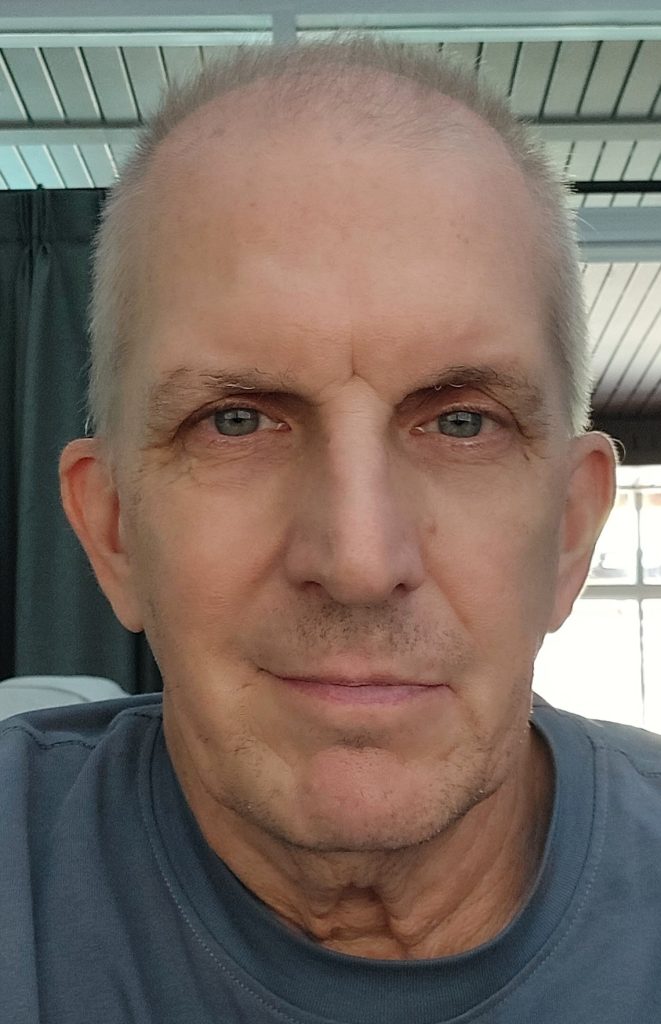
Born and raised in Boston, which explains a lot. A self-described “eclectic multipreneur,” he’s been a technologist, entrepreneur, martial artist, musician, golfer, and writer — not necessarily in that order, and rarely one at a time. He built a bootstrapped IT company to seven figures, earned a 4th-degree black belt (a gift to himself the day he quit smoking at 30), and has spent a lifetime solving problems he finds interesting, which turns out to be most of them. These days he writes about life, politics, and music — and tries to make the road a little clearer for the people coming up behind him.
You can read some of Maurie’s writing at www.MauriesDesk.com/blog and hear some of Maurie’s music at www.BlueBoxProductions.com or his YouTube channel