
Retrocausality

Introduction In the heart of quantum physics, time doesn’t always behave as we expect. While classical physics firmly plants cause before effect, emerging experimental evidence is pushing the boundaries of this assumption. Welcome to the paradox of retrocausality: a reality where the future might influence the past.
What Is Retrocausality? Retrocausality refers to the concept that a future event can influence a past event. This flips our standard understanding of causality and challenges the one-way arrow of time. While it may sound like science fiction, growing data from cutting-edge experiments suggests we may need to reconsider how time and causation actually work.
A Growing Body of Evidence
Recent experimental physics, especially in laser physics, plasma interactions, and quantum optics, is beginning to produce data that doesn’t fit comfortably within classical time-forward causality. While not all scientists accept these as definitive “proof” of retrocausation, the growing pattern of evidence is forcing serious reconsideration.
Why It Matters If retrocausality is real, it has profound implications. Retrocausality is no longer just a thought experiment — it’s a frontier. As research progresses, we may discover that time isn’t a one-way street. The implications span physics, philosophy, and even human consciousness.
The Paradox of Retrocausation
(or retrocausality) is a concept in philosophy and theoretical physics that challenges our typical understanding of cause and effect — specifically, the idea that an effect can occur before its cause.
Key Concepts and Foundations
- Definition:
Retrocausation refers to a scenario where a future event influences a past event. This defies the classical “arrow of time” which moves from past to future. - Causal Loop Paradoxes:
If information or action from the future affects the past, it could create loops where the origin of an action or information becomes unclear — e.g., a person receives a message from the future, acts on it, and then later sends that same message back to their past self. These are known as bootstrap paradoxes. - Philosophical Implications:
- Challenges determinism and free will.
- Raises questions about the nature of time — is it linear, or could it be bidirectional under certain circumstances?
- Suggests that the past might not be fixed, or the future might already exist (a view supported by block universe theory in physics).
Physics and Retrocausality
Several interpretations of quantum mechanics and theories in physics flirt with retrocausation:
- Transactional Interpretation (TI):
Proposed by John Cramer, TI suggests that quantum events involve a “handshake” between past and future — waves are sent forward and backward in time. Though controversial, this model mathematically aligns with standard quantum mechanics. - Wheeler’s Delayed Choice Experiment:
In these experiments, the decision to observe a particle (wave or particle behavior) can be made after it has already entered a detector setup — seeming to retroactively affect its earlier state. - Quantum Entanglement:
Though not necessarily retrocausal, entanglement raises questions about instantaneous connections that challenge classical notions of causality. - Closed Timelike Curves (CTCs) in General Relativity:
Theoretical constructs (like those in Gödel or Tipler spacetimes) could allow for time loops, raising the possibility of retrocausal influence.
Paradoxes and Logical Issues
- Grandfather Paradox:
If you travel back and prevent your grandfather from meeting your grandmother, how could you have existed to do so? - Information Paradox:
Where does the information in a causal loop originate? This can violate conservation principles or lead to “uncaused” knowledge.
Modern Exploration
Philosophical Models:
Retrocausality is being considered in models of time-symmetric physics, where the laws of nature don’t inherently prefer a direction of time.
Quantum Retrocausality Research:
Some physicists (like Huw Price and Ken Wharton) are exploring how retrocausality could make quantum mechanics more intuitive, possibly solving issues like the measurement problem.
🔬 Recent and Emerging Examples Suggesting Retrocausality
1. Laser-Induced Plasma Events and Time-Symmetric Effects
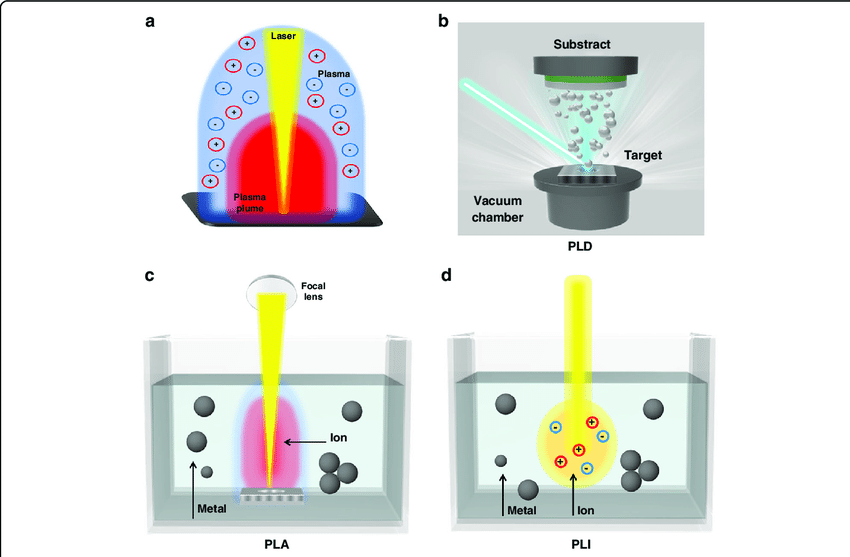
- High-intensity laser experiments with plasma (ionized gas) have shown nonlinear electromagnetic behavior where energy input seems to be influenced by conditions set later in the experiment, or where earlier states are altered by later interactions.
- Some experimental designs suggest feedback from future boundary conditions affects particle paths — a phenomenon not predicted by standard models.
- These setups closely resemble Wheeler–Feynman absorber theory, which posits that an emitter sends waves both forward and backward in time — and the absorber in the future plays a role in “allowing” the emission in the past.
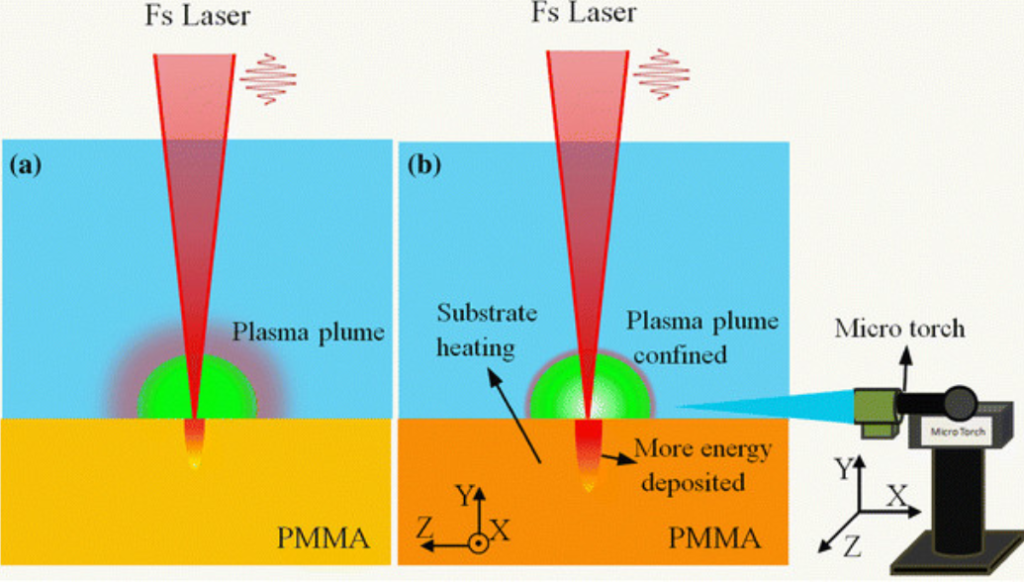
⚡ Example: A particle appears to “choose” a path through plasma in a way that matches boundary conditions set after it has passed through the medium.
2. Delayed-Choice Quantum Eraser Experiments (Refinements)
- These experiments, refined in the 21st century, now show entangled photons can “decide” whether to behave as a particle or wave based on measurements made after they’ve already been detected.
- Newer variants of these experiments (e.g., using quantum memory storage or photonic delay lines) have pushed the envelope by adding multiple decision points — all pointing to measurement influencing history.
⚛️ Implication: The decision to observe one outcome vs. another seems to retroactively determine the behavior of the system at an earlier time.
3. Weak Measurement and Pre-/Post-Selection (Aharonov et al.)
- The Two-State Vector Formalism (TSVF), championed by Yakir Aharonov, treats quantum systems as being described by both forward- and backward-evolving wavefunctions.
- These experiments show that future measurements influence the present under carefully designed setups — sometimes producing “anomalous” values that cannot be explained by forward-causal dynamics alone.
📈 Example: A particle measured at time
t1seems to exhibit properties that are only consistent with information known at timet2 > t1.
4. Hawking Radiation and Time-Reversed Information
- In black hole physics, Stephen Hawking’s original radiation model suggested information loss, which many physicists now argue violates quantum mechanics.
- Some proposed fixes involve retrocausal information recovery — information seemingly radiated before it fully falls into the black hole or even “emitted” from the future endpoint of evaporation.

5. Retrocausal Thermodynamics Models
- Some researchers are testing entropy and causality breakdowns at ultra-low temperatures or near quantum phase transitions.
- These conditions reveal reversibility and non-local behavior in systems where entropy should flow only forward in time.
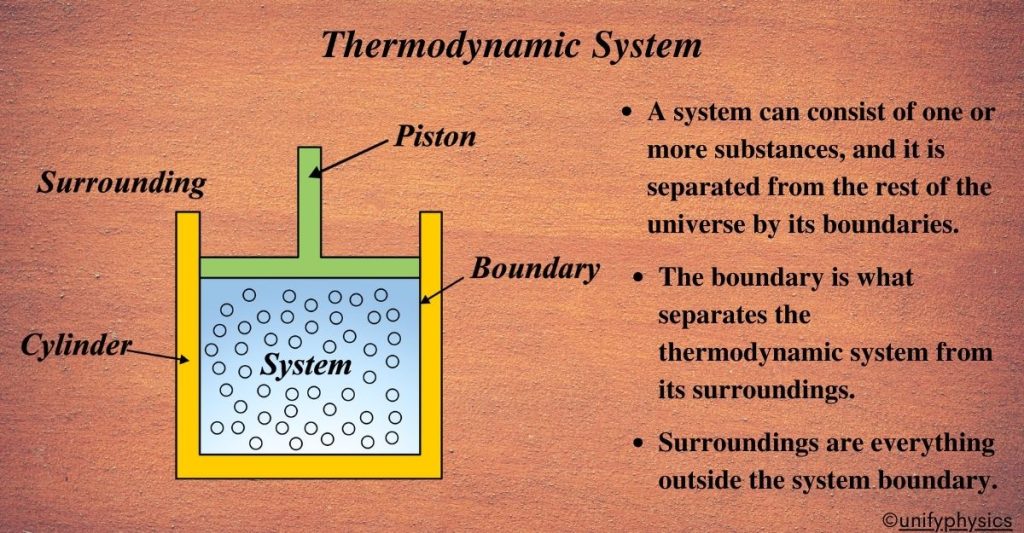
🌡️ Example: A system cools down and reorders itself before being thermodynamically driven to do so — suggesting a retroactive influence.
🚀 Are These “Proof”?
Not yet — but:
- They are repeatable.
- They match predictions from retrocausal interpretations.
- They fail to be explained solely by forward-causality.
Even skeptics admit these findings strengthen the case for a time-symmetric (or even retrocausal) interpretation of quantum mechanics.
🔮 What This Might Mean
If retrocausation is real, it opens doors to:
New technologies in energy control, computation, and even communication (e.g., quantum retrocausal encryption)
Precognitive phenomena (possibly grounded in physics)
Rewriting quantum theory with time-symmetry at its core